


Choosing an assisted living facility is a significant decision for an aging relative. This guide provides a systematic inspection checklist to help families evaluate senior living options with confidence. It covers pre-visit research, environmental and safety evaluations, care planning, staffing, resident life, and financial considerations. By following this pathway, families can compare options effectively and identify potential red flags. For further assistance, Age Well Now offers a Find Senior Care tool to compare local options and apply this checklist during the placement process.
Pre-Visit Checklist for Families
Before a tour, families should research the facility’s regulatory status, typical services, and cost structures. This preparation helps focus on-site observations and questions regarding licensing, included services, and transition policies for changing care needs.
- Prepare a short list of essential questions for administration and care staff.
- Verify the facility’s state license status and any voluntary accreditation.
- Confirm baseline services included in the monthly fee and identify typical add-on charges.
- Request sample contracts and the facility’s emergency preparedness overview.
- Check local inspection reports and recent complaint summaries.
This checklist ensures a focused on-site tour and facilitates consistent evaluation across multiple facilities.
Understanding Licensing and Accreditation
Licensing and accreditation signify different levels of oversight. State licensing enforces mandatory minimum standards for safety, staffing, and reporting. Accreditation indicates voluntary, often higher, quality commitments, evaluating operational practices, staff development, and resident-centered care. Accreditation often translates to stronger policies on training and quality improvement.
| License or Accreditation | Typical Attribute to Verify | What That Means for Families |
|---|---|---|
| State License | Compliance inspections, minimum staffing rules | Confirms baseline safety and legal operation; does not guarantee high-quality programming |
| Medicare/Medicaid Certification (if applicable) | Billing eligibility, certain standards for skilled services | Indicates ability to provide or coordinate some subsidized services; not all assisted living facilities have this |
| Voluntary Accreditation (e.g., industry body) | External reviews, quality metrics, best-practice policies | Suggests the facility meets higher voluntary standards and undergoes periodic external evaluation |
| Certificate of Need / Local Permits | Local approvals for operation and expansions | Demonstrates local regulatory compliance and oversight |
Licensing confirms legal operation, while accreditation often signals extra commitment to quality. Use these markers alongside price and service details when narrowing choices.
Typical Costs and Services Overview
Assisted living pricing usually separates a base monthly fee for housing and some services from variable care charges. Families should request a detailed fee schedule. Base rates typically include meals, housekeeping, basic personal care, and shared amenities. Medication management, specialized nursing, and transportation may be billed separately. Ask for billing examples and policies on fee increases and refunds to anticipate future costs.
Facility Environment and Safety Evaluation Checklist
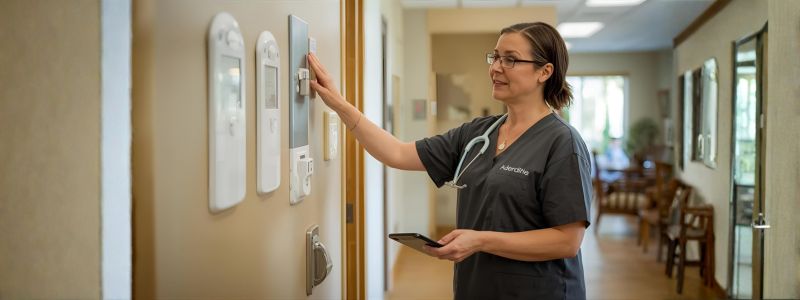
A thorough evaluation focuses on cleanliness, accessibility, fire and emergency systems, infection control, and visible maintenance. Observe common areas, resident rooms, bathrooms, and outdoor spaces for odor control, trip hazards, and functional accessibility features.
- Review documented fire safety and evacuation plans; note last inspection dates.
- Test call buttons or emergency alert systems in a sample room and confirm response protocols.
- Inspect hallways and bathrooms for clear paths, secure handrails, non-slip flooring, and adequate lighting.
- Inquire about infection control policies, cleaning schedules, and recent outbreak responses.
- Verify maintenance logs for elevators, HVAC, and kitchen equipment.
These steps help confirm that written safety plans align with observed conditions and staff practices.
Safety Protocols and Emergency Preparedness
Emergency preparedness involves written plans, staff training, and drills. Request to review evacuation plans, incident logs, recent drill dates, and staff training schedules. Verify that staff know resident-specific evacuation needs and that communication plans include family notification. Concrete evidence of active and practiced emergency preparedness is crucial.
| Safety System | Attribute to Verify | Expected Evidence |
|---|---|---|
| Fire Alarm & Sprinkler | Last inspection date and certification | Recent inspection tags, maintenance logs, and escape-route maps |
| Emergency Call/Alert System | Functionality and average response time | Demonstrated response during tour and incident logs |
| Infection Control | Written protocols and recent training records | Policy documents, staff training dates, and cleaning schedules |
| Accessibility Features | Ramps, handrails, door widths, bathroom aids | Physical inspection and maintenance records |
Confirming records and seeing systems in action reduces uncertainty about operational reliability.
Cleanliness and Accessibility Assessment
Cleanliness and accessibility directly impact resident health and mobility. Observe for consistent housekeeping, crisp linens, and prompt response to spills. Test accessibility elements like door widths, ramp gradients, and the functionality of lifts or elevators. Inquire about maintenance scheduling for any observed repairs or accessibility deficits.
Care Services and Staffing Inquiry Checklist
Effective care relies on individualized care plans, reliable staffing, and robust staff training. Prioritize questions that reveal how these systems operate to ensure personalized, documented, and regularly reviewed care.
- Inquire about care plan creation, participant involvement, and review frequency.
- Request average staff-to-resident ratios for different shifts and on-call clinical support.
- Ask about staff hiring practices, background checks, certifications, and ongoing training frequency.
These questions to ask provide direct, comparable responses to determine if care is proactively managed.
Care Plan Development and Updates
Care plans should be individualized, developed through multidisciplinary assessment, and updated regularly. Ask who participates in the process (nursing, caregivers, therapists, family) and how families are notified of changes. Confirm formal review frequency and triggers for unscheduled reassessments (e.g., falls, health changes). This clarifies accountability and communication.
| Care-Plan Element | Attribute to Verify | Practical Outcome |
|---|---|---|
| Assessment Process | Multidisciplinary evaluation and family input | Individualized plan reflecting medical and social needs |
| Review Frequency | Scheduled reassessments and incident-triggered updates | Timely adjustments to changing health conditions |
| Documentation | Written plan accessible to family and staff | Clear responsibilities and consistent care delivery |
Ensure care plans are living documents that adapt to changing needs and guide staff effectively.
Staff-to-Resident Ratios and Training Standards
Staffing ratios and training standards directly impact daily care quality and emergency responsiveness. Request average ratios by shift and information on staff competencies and turnover. Compare the facility’s staffing model to your loved one’s needs. Ask about mandatory training topics, certification requirements, and continuing education for dementia care, medication management, and emergency response. High turnover or training gaps can indicate inconsistent care.
Resident Life, Amenities, and Social Engagement Assessment

Resident well-being encompasses dining quality, activities, social engagement, transportation, and privacy. Observe residents during meals and activities to gauge mood, participation, and staff interaction. Request an activities calendar and sample menus.
- Review the weekly activities calendar and examples of resident participation.
- Request sample menus and details on accommodations for special diets or cultural preferences.
- Verify transportation scheduling, ensuring outings are regular, supervised, and accessible.
These checks reveal whether programming supports social connection, purposeful engagement, and resident autonomy.
Dining, Activities, and Transportation Options
These elements are core to daily resident life and should be varied, inclusive, and documented. Quality dining includes menu variety, dietary accommodations, and pleasant communal areas. Activities should span physical, social, and cognitive domains with clear schedules and individualized choices. Transportation services should be reliable and accessible for medical appointments and social outings.
Visitation Policies and Private Spaces
Visitation policies and private-space availability impact family relationships and resident dignity. Ask about hours, restrictions, and options for private rooms or personalization. Flexible visitation supports mental health and family involvement. Private rooms or dedicated family visit spaces preserve privacy. Confirm room personalization policies and options for overnight family stays.
Financial and Legal Considerations Checklist
Understanding contracts, fees, billing, resident rights, and discharge policies is crucial to avoid unexpected costs and protect resident interests. Request full contract copies and an itemized fee schedule for review.
- Request a copy of the full contract and an itemized fee schedule before any deposit.
- Ask about notice periods for fee increases, refund terms for deposits or prepaid months, and conditions for additional charges.
- Verify how billing disputes are handled and if sample invoices are available.
These financial checks protect families from surprise charges and provide a basis for comparison.
Contracts, Fees, and Billing Practices
Contracts often combine housing, services, and care fees. Clarify what the base rate covers and what triggers additional charges. Ask for invoice examples, the mechanism for fee increases, and if care-level changes alter billing tiers. Confirm the refund policy for deposits and termination conditions. Verifying these details protects finances and decision-making.
| Contract Clause | Attribute to Verify | Expected Family Impact |
|---|---|---|
| Monthly Fee Structure | What is included vs. itemized extras | Predictable budgeting and fewer surprise charges |
| Fee Increase Policy | Notice period and escalation method | Ability to plan for future cost increases |
| Refund & Discharge Terms | Conditions for refunds and involuntary discharge | Financial protections and clear appeal processes |
Comparing these elements across facilities makes cost transparency a core factor in selection.
Resident Rights and Discharge Policies
Resident rights and discharge policies ensure dignity and legal protections. Request the facility’s written resident bill of rights and grievance procedures, and understand the appeals process. Protections include freedom from abuse, informed consent, privacy, and participation in care decisions. For discharge, ask what behaviors or health changes trigger transfers, required notice, and appeal processes. Knowing these helps families advocate effectively.
Common Red Flags and Warning Signs Checklist
Red flags signaling poor care or neglect include consistent odors, unexplained injuries, medication errors, high staff turnover, and evasive staff responses. Document concerns immediately.
- Visible neglect: unkempt residents, soiled clothing, neglected personal hygiene.
- Frequent unexplained injuries, bruises, or weight loss without medical explanation.
- Recurrent medication errors, missed medications, or lack of documentation.
- Staff shortages, high turnover, or staff avoiding direct questions about care.
Documenting these signs with dates and witness notes creates a factual record for escalation if concerns are not promptly remediated.
Identifying Poor Care, Staff Issues, and Neglect
Identify poor care by observing resident condition, staff interactions, and operational consistency. Log missed medications, unclean areas, or staff shortages with dates and times. Note staff responsiveness, resident engagement, and whether care tasks are skipped. Ask direct questions about staffing levels and watch for evasive answers or postponed documentation requests. These observations, with documented incidents, create a clear record for regulatory action.
Steps to Take for Warning Signs
If warning signs appear, document incidents with dates, photos (if permitted), and witness statements. Raise the issue with facility management, requesting written acknowledgment and corrective action. If the facility’s response is inadequate, file a complaint with the state licensing agency, providing your documentation. For urgent safety concerns, seek immediate alternative placement and consider legal or advocacy support. Detailed records and following the escalation path protect the resident and build a case for formal enforcement.
Frequently Asked Questions (FAQs)
What is the most important thing to look for during a facility tour?
Beyond cleanliness and amenities, observe staff-resident interactions. Do staff seem engaged, respectful, and responsive? Do residents appear happy and well-cared for? This often reveals the true culture of the facility.
How often should care plans be reviewed?
Care plans should be formally reviewed at least annually, but also whenever there is a significant change in a resident’s health, mobility, or cognitive status. Families should be involved in these reviews.
Can I negotiate the monthly fee or services?
While base fees are often fixed, some facilities may offer flexibility on certain add-on services or move-in incentives. It’s always worth asking about potential discounts or bundled services, especially if you are comparing multiple options.
What if I suspect neglect but have no concrete proof?
Even suspicions warrant action. Start by documenting observations (dates, times, specific details). Speak with facility management. If concerns persist, contact your state’s long-term care ombudsman or licensing agency. They can investigate confidentially.
How important is voluntary accreditation?
Voluntary accreditation indicates a facility’s commitment to exceeding minimum state standards and undergoing external quality reviews. While not mandatory, it often signals a higher level of quality and continuous improvement efforts, providing an extra layer of assurance for families. Assisted living advantages are essential to consider.
Conclusion
Evaluating assisted living facilities requires a comprehensive approach, balancing safety, quality of life, and cost. By utilizing this checklist—covering pre-visit research, environment, care, resident life, and financial aspects—families can make informed decisions. Prioritize facilities that demonstrate strong licensing, transparent operations, and a genuine commitment to resident well-being. Remember to document observations, ask specific questions, and address any red flags promptly.